Separate exploration from the delivery
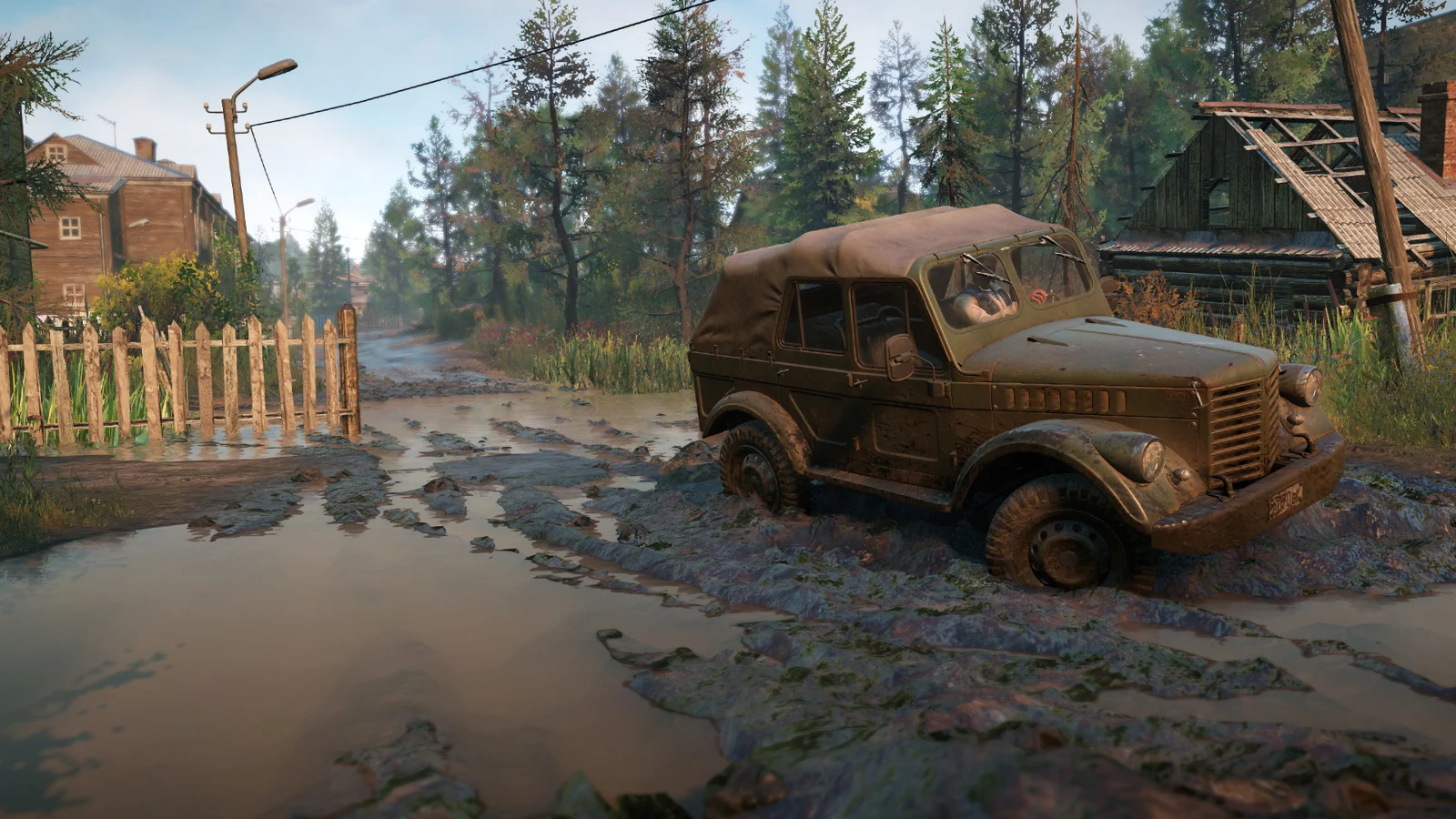
SnowRunner's scouts and cargo trucks solve different parts of a route. A light scout can visit watchtowers, inspect intersections and reveal opportunities before a loaded hauler commits to a narrow track. That does not make every scout automatically capable in deep mud; tyres, installed equipment and the terrain still matter. The reason to scout first is to reduce uncertainty about the path, not to assume a small vehicle is invulnerable. Michigan's early Black River progression provides a clear introduction to this relationship between revealing the map and making roads usable.
Mark decisions rather than every bend
An original reconnaissance note can mark the points where a later truck must choose: a fork with a muddy short route, a damaged connection, a steep descent or a tight passage near water. Record why a point matters. 'Trailer may not turn here' is more useful than a collection of identical waypoints. Look at the route from the perspective of the intended cargo vehicle as well as the scout. A gap that a short vehicle clears easily can still be a poor choice for a long truck and trailer.
Use watchtowers as information, not completion
Reaching a watchtower removes uncertainty from the map, but the revealed line does not describe every rut and side slope. Drive the critical part of the route if the cargo depends on it. Identify fuel access, a potential staging area and a place to turn around. The goal is a usable route report. You do not have to visit every icon before making the first delivery, and a newly revealed shortcut should not automatically replace a road whose surface you already understand.
Bring back a specific recommendation
Finish the reconnaissance with a sentence such as 'use the longer road for the first loaded trip; inspect the riverside approach separately'. This is an illustrative planning example, not a claim that a named shortcut is always impassable. The report should connect the route to the actual truck, trailer and load you intend to use. A good scout trip can feel like an expedition in its own right while also making the later journey much more deliberate.
Route-planning sources
- SnowRunner official Steam listing
- SnowRunner — publisher overview
- Publisher-hosted community tutorials
- Community/editorial beginner reference: scout, watchtowers and early Michigan
- Controls reference: AWD, differential lock and winch
- Community mechanical reference: winch types and engine-power requirement